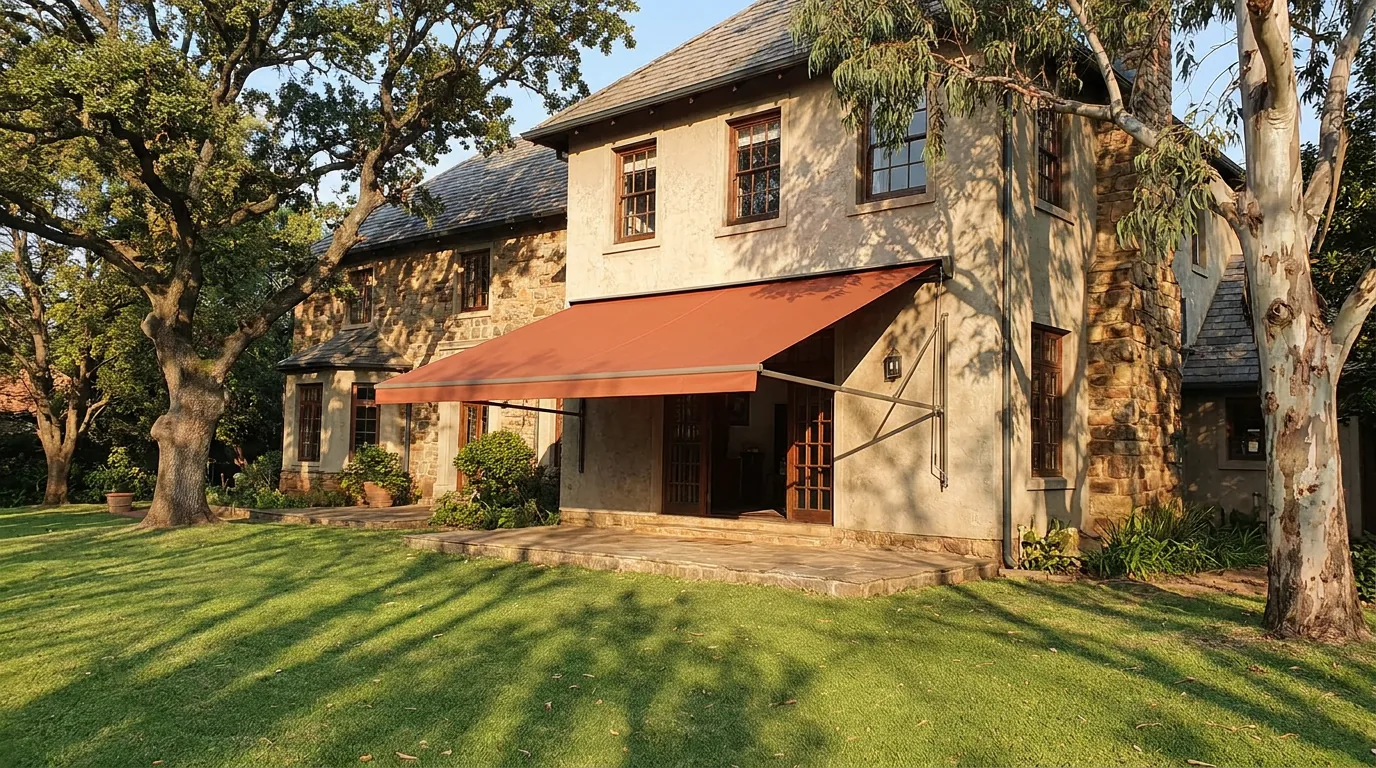
Written for houses standing on an old gum plantation: what the Highveld year does to your glass, which wall will cost the most to solve, and where we would spend first.
The trees were here thirty-four years before the houses.
In 1891 Hermann Eckstein’s company put a timber plantation on this ground and called it Sachsenwald — better than a million blue gum and red gum across roughly 1,300 acres, grown to prop the mines. The township came thirty-four years later, in 1925, and the surveyors who drew these streets were holding a sightline to the Rand Regiments Memorial. Not a sun angle.
So the canopy overhead is inherited. It was never a shading decision.
It is also the most expensive misreading we meet at a Saxonwold measure. Somebody stands in a green, gentle-looking lounge at eleven in the morning and concludes that the trees have it covered. Come back at half past four and the same room is lit like a stage. Dapple is direct sun with holes in it — the holes travel all day, they widen the week a limb comes out, and in June, when the sun is at its lowest and most welcome, a great deal of that shade is lying flat on the lawn instead of standing between you and the glass.
The Highveld year
What the sky over these avenues actually does.
Read it as a calendar rather than a list of facts — the year is what decides the specification. Sources at the foot of the page.
October to March is the loud half of the year
Ten to eighteen wet days a month from December through March. Hail from October through March, peaking in November. Severe storms over Gauteng concentrated in October and November. Anything that lives outside the glass is specified around those five months, or it does not survive them.
Three o’clock, and the west wall stops helping
Sunset swings between a bearing of about 243° in midsummer and 295° in June, and by the time the sun is on either of those it is low. Low sun arrives under an eave rather than over it. This is the hour people describe when they phone us, and it is almost never a north-facing room they are describing.
June is heat you actually want
At midday in June the sun stands about 40° up and due north, pushing free warmth through the same pane that was a problem in February. The dry runs with it: nought to one wet day a month June to August, minima near freezing, against an annual mean of 15.9 °C and roughly 784 mm of rain a year. A single-glazed room under a three-metre ceiling swings hardest in both directions.
December puts the load on the roof
At the December solstice the midday sun reaches about 87° — near vertical — so a north wall is barely lit at noon and the roof takes it instead. The trouble sits at the two ends of the day: 13 hours 47 minutes of it, first light at 05:13 on a bearing of about 116°, well south of due east.
1,700 metres of thinner air
Altitude buys ultraviolet — roughly 10% more for every 1,000 m — and a Highveld winter hands it over under a cloudless sky. Ultraviolet breaks the bonds in dye. It goes after an Oregon floor, a wool rug, the spines of the books on a west wall, and in the end the blind fabric doing the protecting.
Two moves instead of one
It comes in sideways. So should the answer.
Anything that only travels up and down is making you choose between the glare and the view. Set the angle of a slat instead and the room stays bright, the park stays visible, and the beam landing on the piano stops.
Aspect first
Walk it with a compass, and start at the west wall.
Which way a window faces changes the answer more than what the room is used for. Take the four walls in the order of what they will cost you to solve.
West — where the money goes
Sunset sits between 243° and 295° across the year and the sun is low on every one of those bearings, so it arrives under the eave and lands square on the glass. Overhead projections do close to nothing here. If there is one elevation to solve properly rather than cheaply, this is it.
East — same geometry, gentler bill
The mirror image, opening at 05:13 in midsummer, except the fabric of the house is still cool at that hour. The complaint is glare and an early start, not heat. Bedrooms on this side are a blockout conversation. Lounges on this side usually are not.
North — geometry does half the work
The one wall where a horizontal projection earns its keep: near-vertical December sun is cut by a deep eave or a stoep roof, while the 40° June sun still gets underneath and into the room. That is the reasoning SANS 10400-XA applies to new buildings, and an old Saxonwold stoep is often already doing it.
South — quiet, not exempt
Because midsummer sunrise and sunset both fall south of the east–west line, a south wall catches a low slice early and late in December, then nothing at all through winter. Flattest light in the house, coolest rooms, and the ones we would dress most lightly.
The specification
Seven answers, and what each one takes from you.
None of these is right everywhere in a house. Each earns its place on a particular wall and gives something up to get there, so both halves are written down. Tap Add to my enquiry and it carries down to the form.
Roller blinds — sunscreen or blockout
Best on: park-facing glass (sunscreen) · bedrooms (blockout)
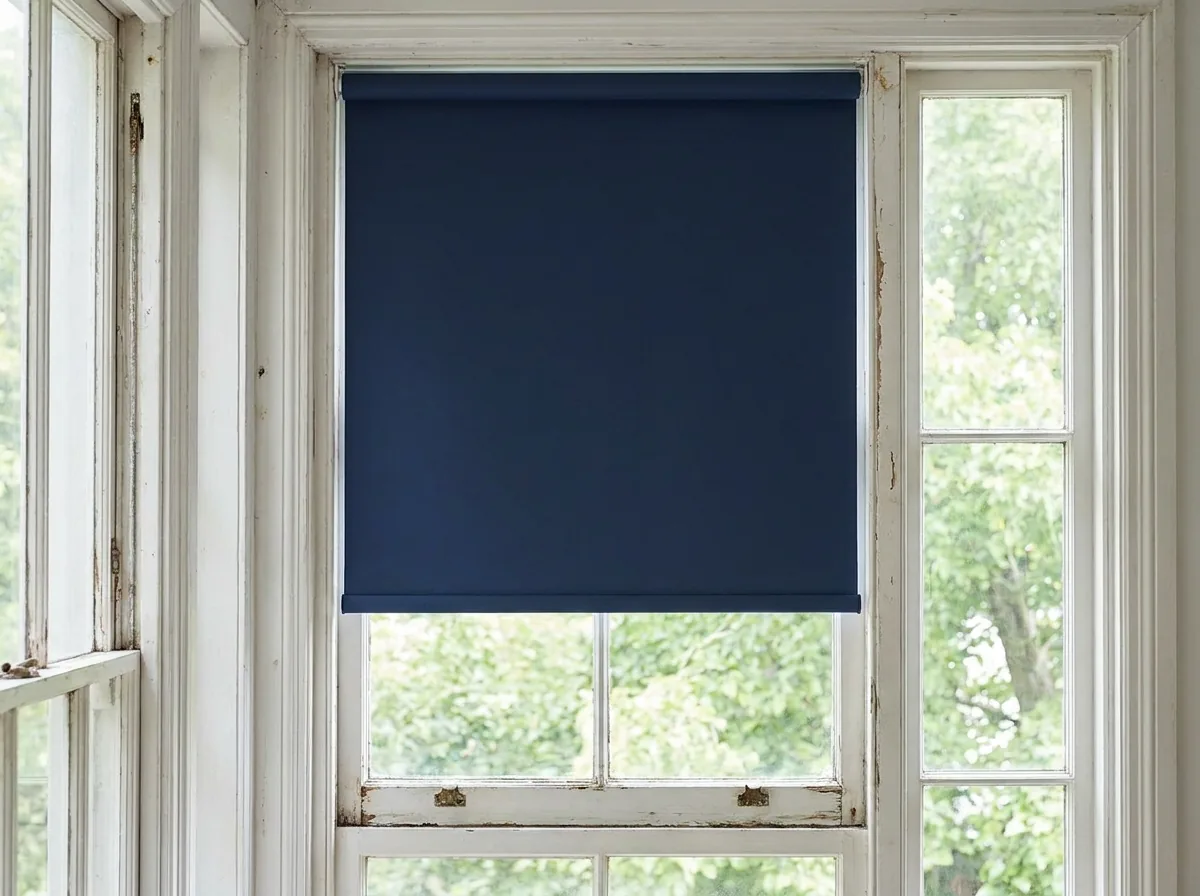
The case. Two very different fabrics on the same plain mechanism. A 3–5% openness sunscreen leaves the view intact — the trees are half the reason for the address — while taking the sting out of the glare and much of the ultraviolet with it. Blockout is the opposite argument: 05:13 is early, and one flat sheet on a tube is the simplest way to hold a bedroom dark.
What it costs you. Sunscreen works in one direction only. After dark, with the lamps on, the privacy runs backwards. And blockout is only ever as dark as its edges — fitted inside a reveal there will be a line of light down either side. On a bedroom facing the sunrise, a double roller carrying both fabrics is usually the honest answer.
Day-night blinds
Best on: rooms that look onto a pavement or a shared boundary
The case. Sheer and solid bands ride past each other, so the blind moves from open view to eye-level privacy without ever leaving the window. On a street-front room it is a softer instrument than a vertical blind and a lot quieter than a heavy curtain against old joinery.
What it costs you. It will never be a true blockout, so assume light. The banding is also a loud horizontal pattern to stand next to a moulded architrave — take a sample home and hold it up in the actual room before you commit a whole front elevation to it.
Cellular / honeycomb blinds
Best on: original single glazing you are not allowed to replace
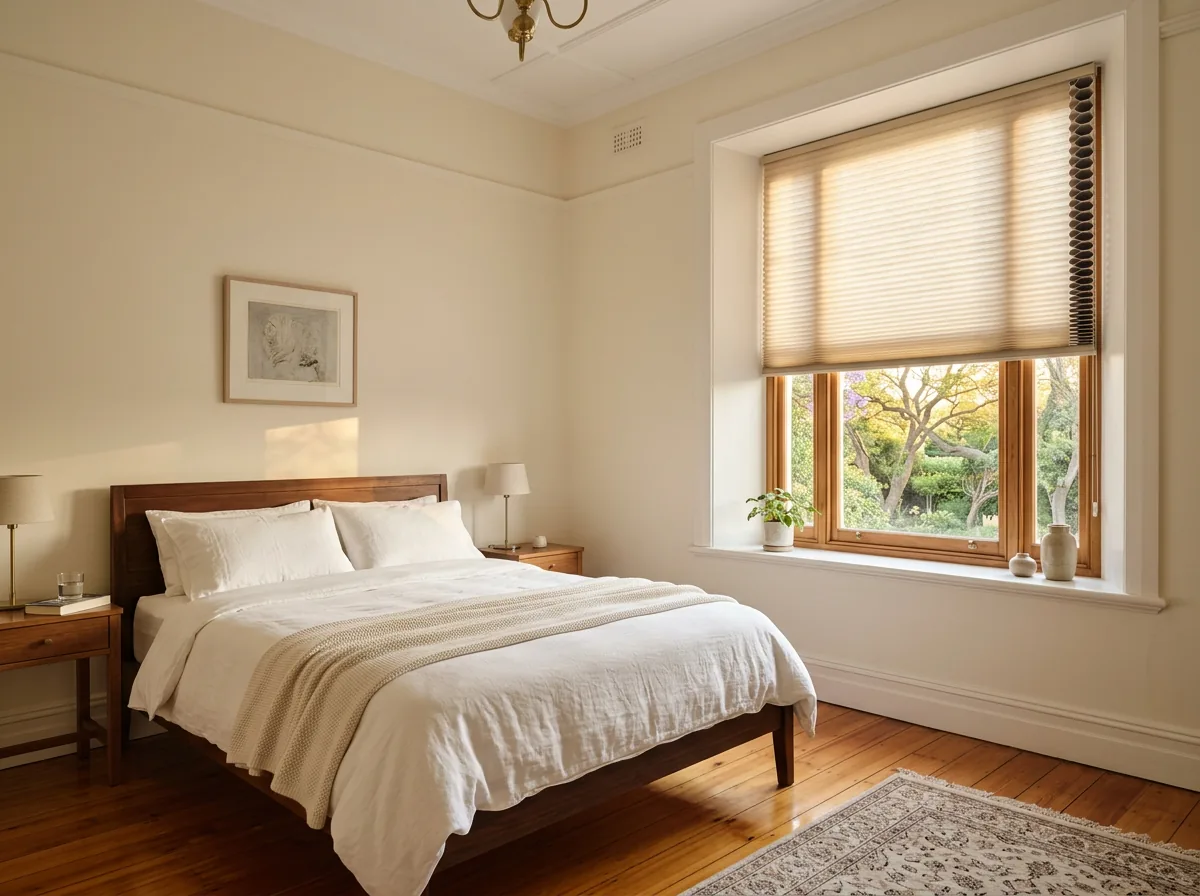
The case. The fabric folds into cells and every cell holds a pocket of still air against the pane. In a room with one sheet of 1920s glass, a three-metre ceiling and July nights near freezing, that trapped air is the least invasive comfort you can buy: no new frames, no altered sashes, nothing about the window itself changed.
What it costs you. It sits on the inside, which is the wrong side of the glass for summer. Against a hard west sun it is only slowing heat that has already arrived, and an external product beats it outright. On a bad west window the specification is usually both — external for February, cellular for July.
Timber & aluminium venetian blinds
Best on: studies and dining rooms (timber) · sculleries and bathrooms (aluminium)
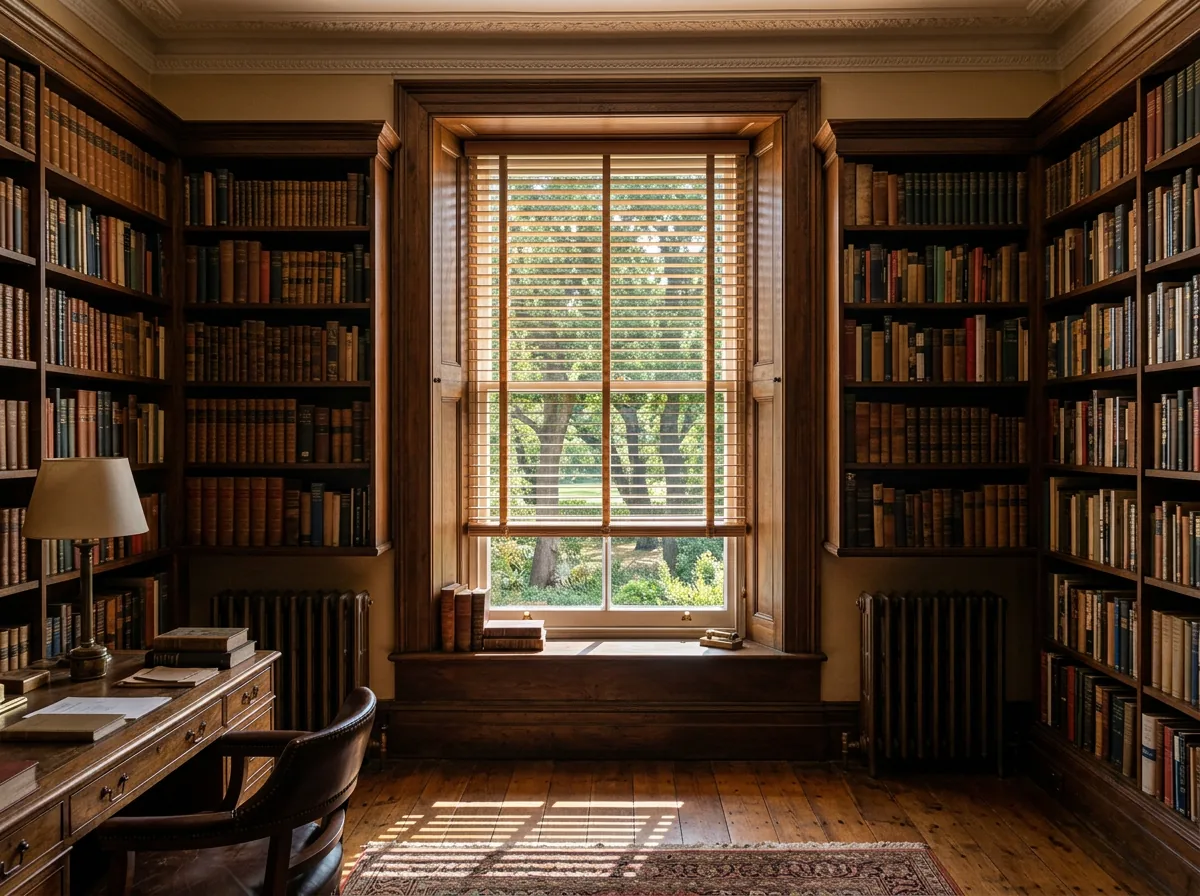
The case. A tilting slat answers low sun on its own terms. Close the angle thirty degrees and the beam stops while the room stays lit — the one thing a roller cannot do without covering the window outright. Timber sits well against the warm joinery in these houses; aluminium goes wherever there is steam.
What it costs you. A timber venetian stacks deep. Fully raised it will cover more glass than a roller does, which matters on a short sash above a sill. Basswood has no patience with steam either, so a bathroom given timber will warp it inside two winters.
External venetians & roller shutters
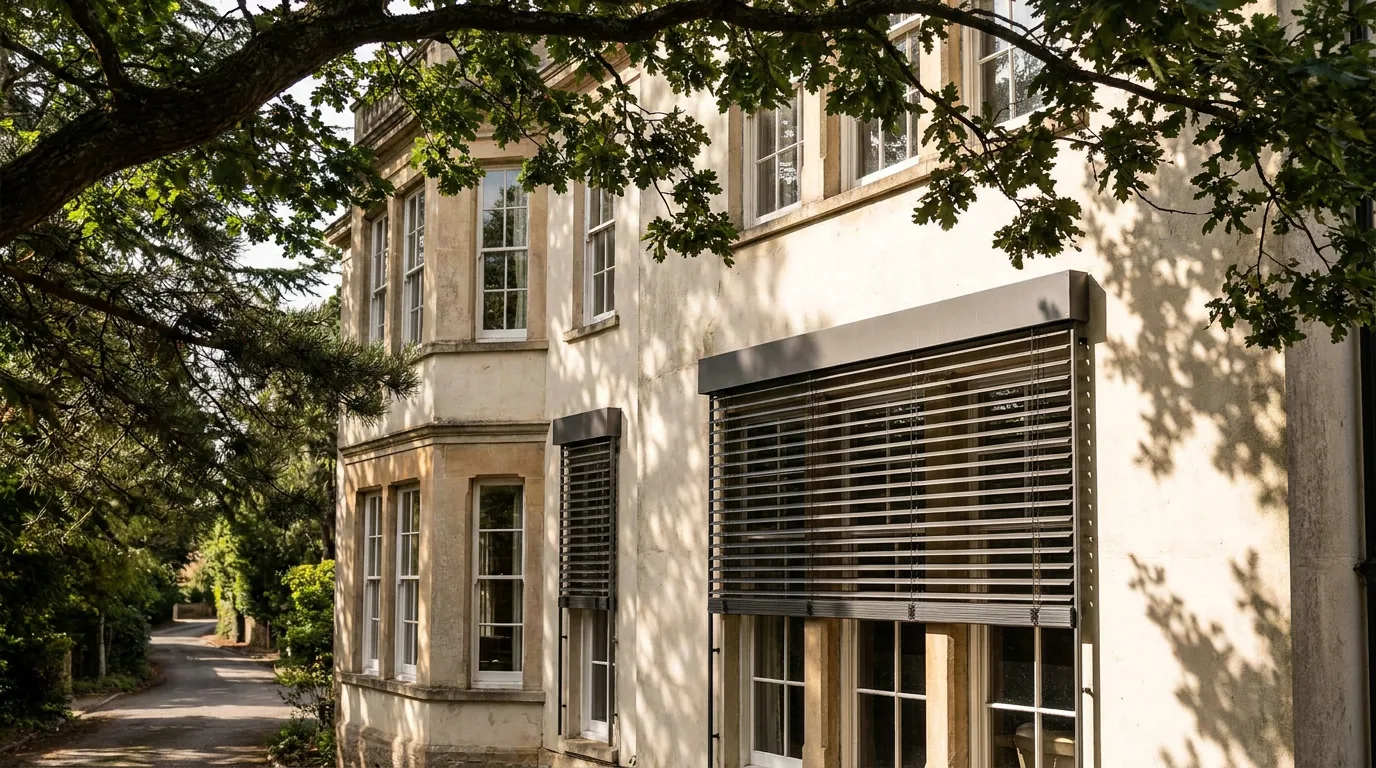
Best on: hard west and north-west glass with no overhang
The case. Both of these stop the sun before it becomes heat inside the room. An interior blockout kills the glare in a second, but the pane behind it has already absorbed the energy and will radiate it back at you all evening. Outside, the venetian keeps a tilt and therefore a view; the shutter closes solid and rolls away into a smaller head box.
What it costs you. These are the dearest answers on the page, they want a motor, and they need a plan for the storm season — a wind rating is engineering, not a sales line. They are also, unmistakably, a change to the outside of the house, which puts them straight into the heritage question below. Shading, not security: ours are built to control sun, heat and glare from outside the pane. A shutter rated for security is a different product, and we'll price one on request.
Folding-arm awnings & zip screens
Best on: the stoep and the terrace
The case. An awning puts shade over a terrace with nothing standing in the way of it, then folds back when you want the June sun on the paving — which is exactly where a fixed pergola loses the argument. A zip screen does a different job altogether: fabric held under tension in side channels, so it keeps its shape in a breeze and still shows you the garden through it.
What it costs you. October to March is the whole discussion. Wind and hail ratings are limits, not promises, and an awning left out in a November squall does not come back. We would rather quote a motor and a wind sensor than a manual awning and a hope that somebody is home.
Motorisation
Best on: tall sashes, gables, skylights, anything outdoors
The case. At three metres a blind nobody can reach is a blind nobody adjusts, and an unadjusted blind is just a permanently dark window. Outside, a wind sensor pulls an awning in before the storm arrives, whether or not there is anyone at home to see it coming.
What it costs you. Power has to get there. In a house where the walls are original and chasing them is the last thing anyone wants, the cable route is a real design question — sometimes there is a ceiling void directly above, sometimes the answer is a battery motor and a charging habit.
Optional
Have it marked against your own elevations.
Name the rooms giving trouble and we will send this page back with notes written against your walls — where we would start, where we would spend, and which windows we would leave alone. Nobody comes to the house for this, and it does not commit you to a measure.
Heritage
Every original house here is already over sixty.
The township was proclaimed in 1925, so the arithmetic has long since been done for most of the stock on these streets. Section 34(1) of the National Heritage Resources Act says no person may alter or demolish a structure — or any part of one — older than sixty years without a permit from the relevant provincial heritage resources authority. “Alter” is defined broadly: any action affecting the structure, appearance or physical properties of a place. Age is the trigger. The house does not have to be listed, and work done without the permit can end in an instruction to put it back as it was.
That line runs right through this guide, and it is a tidy one. A blind fitted inside the room changes neither the structure nor the way the house reads from the avenue. Anything hung on the outside wall changes both.
We fit blinds. We are not heritage practitioners and we will not guess what the answer would be for your address — but we will raise it at the measure, and we will specify the interior scheme so that it stands on its own if the external half never happens.
The limits of a page
Four questions no guide can answer from a desk.
Everything above narrows the field. These four get settled standing in the room with a tape, which is the reason the measure is free.
Is the opening square, and how deep is the reveal?
A hundred years of settling leaves sashes and casements out of true, and two reveals in the same room will rarely match. We take the width in three places. The depth decides whether an inside mount is possible at all, which in turn decides how much light escapes past a blockout.
What is the frame made of, and will it hold a fixing?
Oregon, meranti, steel casement and aluminium each take a screw differently, and some of the original timber in these houses is either too soft or too good to drill. When that is the case we mount to the masonry around it instead — but only after somebody has actually looked at it.
How exposed is that wall, really?
Between October and March this is the whole question for anything external. A stoep tucked in behind a gable and a terrace standing open to the west are not the same brief, and frequently not the same product.
Where is the power going to come from?
Motorising a high sash is simple right up to the moment a cable has to reach it without opening an original wall. Sometimes there is a ceiling void directly above. Sometimes the answer is a battery motor — and you want to know that before the order, not after it.
There is a fifth, and it saves money rather than spending it: a fair share of the afternoon shade on these plots is already being done by a mature oak or a deep stoep. Knowing which windows need nothing is worth as much as knowing which need work, and we will say so on the day.
Two ways forward
A proper measure, or a number to think about first.
Both of them start on the same short form below.
Recommended
The free expert measure & written quote
A consultant brings samples, measures every opening properly, and walks the house with you at the hour the light is actually a problem. You keep an itemised written quote, window by window. None of that costs you anything, and none of it obliges you to buy.
Put in rough sizes and a budget range comes back by the next working day. If measuring is not your idea of a Saturday, skip it — the consultant does that part for free regardless.
One short form and you are done. The window list underneath it is optional — fill that in only if you want a budget range in the meantime.
Sources
Every figure above, and where we got it.
Sun paths, climate, heritage law and the history of the plantation all come from the list below. Anything we could not stand behind was left out rather than rounded into a sentence that read better.
Sunrise, sunset and solstice bearings, latitude and elevation for Johannesburg — Gaisma, Johannesburg
Standing at a window a few streets over? The same sun-path reasoning holds across Parkview, Parktown North, Forest Town and Houghton Estate — what changes is the age of the stock and how exposed the plot is.