One smooth sheet. Three ways to use it.
Roller blinds are the everyday answer for Saxonwold's windows — a single flat fabric panel on a tube, cut to the actual opening, in blockout, sunscreen or a double-roller pairing of both.
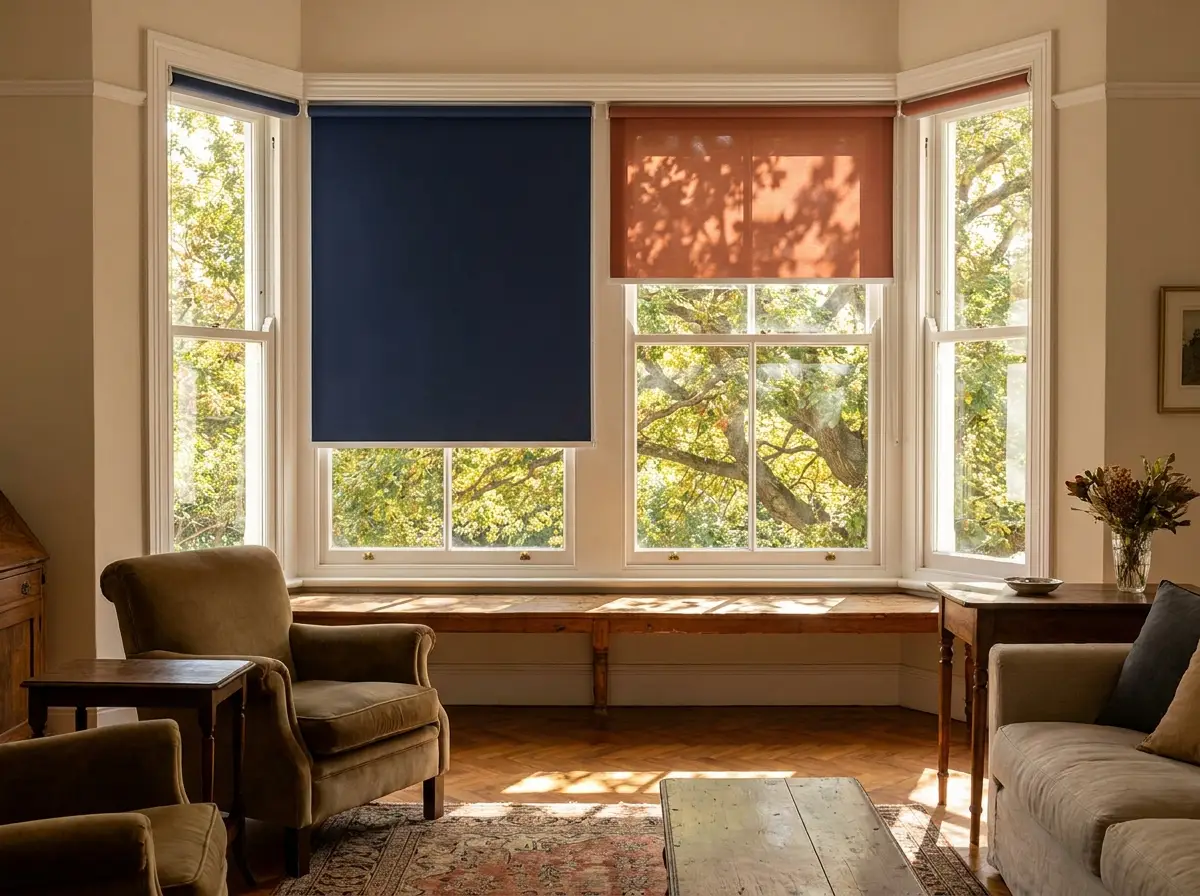
Roller blinds are the everyday answer for Saxonwold's windows — a single flat fabric panel on a tube, cut to the actual opening, in blockout, sunscreen or a double-roller pairing of both.
Choose your fabric job
The tube is the same. The fabric decides what the blind does — and most Saxonwold homes end up using all three, room by room.
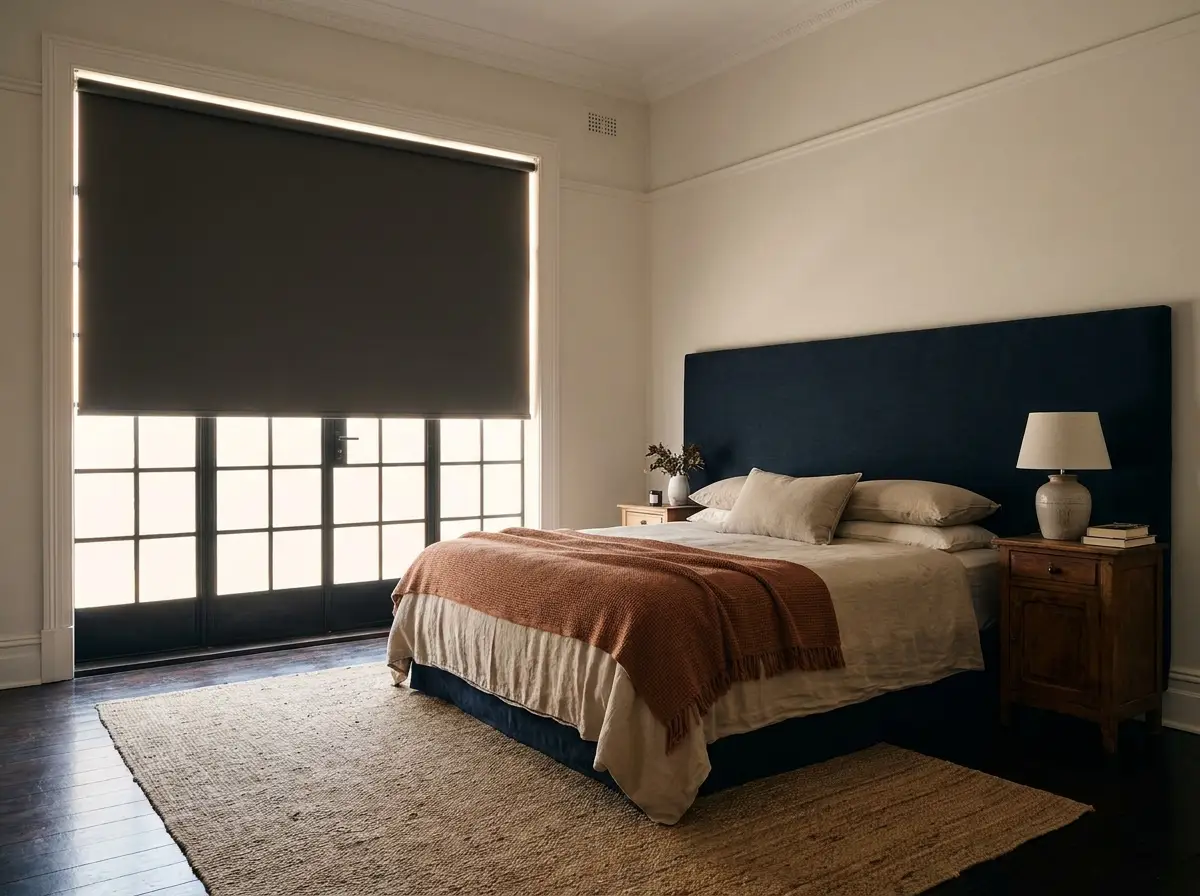
A coated fabric that stops light outright. The bedroom standard — full darkness at six on a summer morning, gone to almost nothing when raised.
Ask about blockout →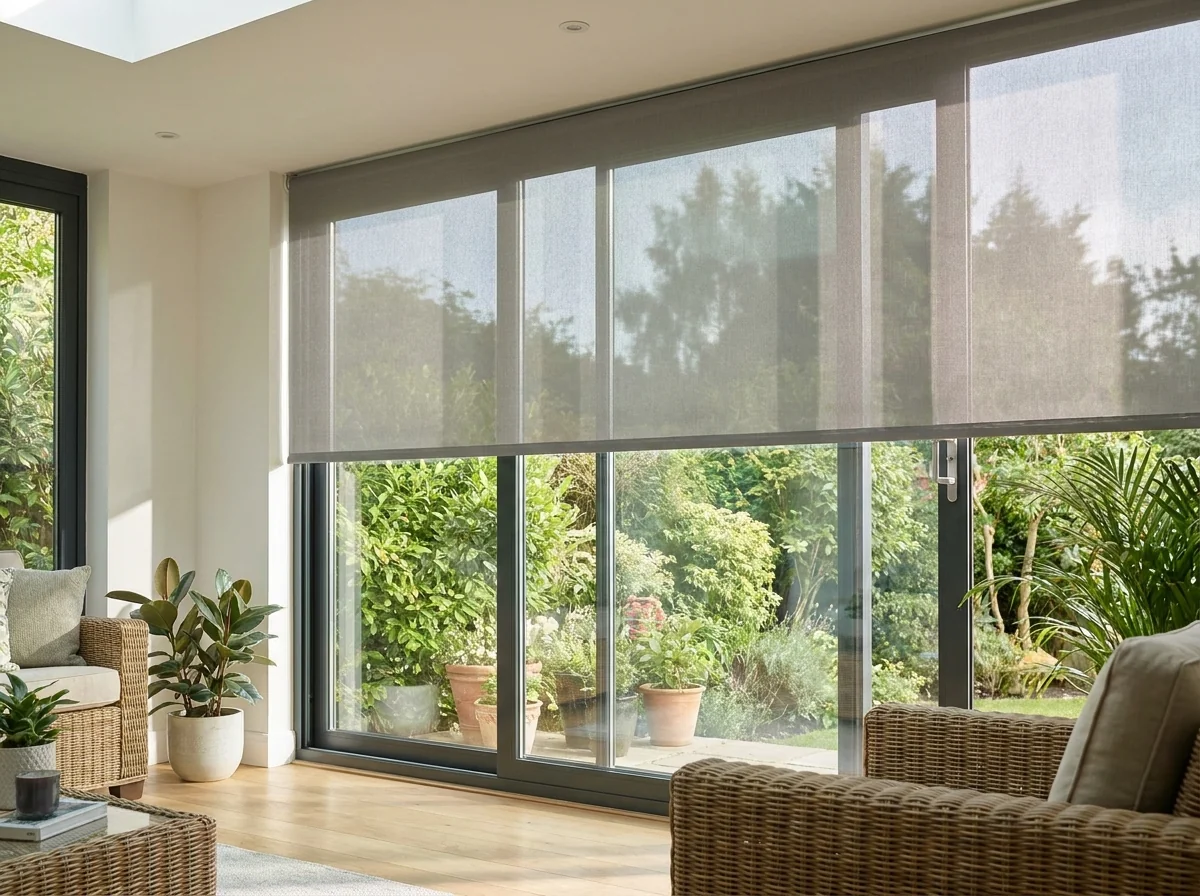
A 3–5% openness mesh that cuts glare and UV while keeping the park view. The answer for living rooms behind the leaf shadow that still cook by four o'clock.
Ask about sunscreen →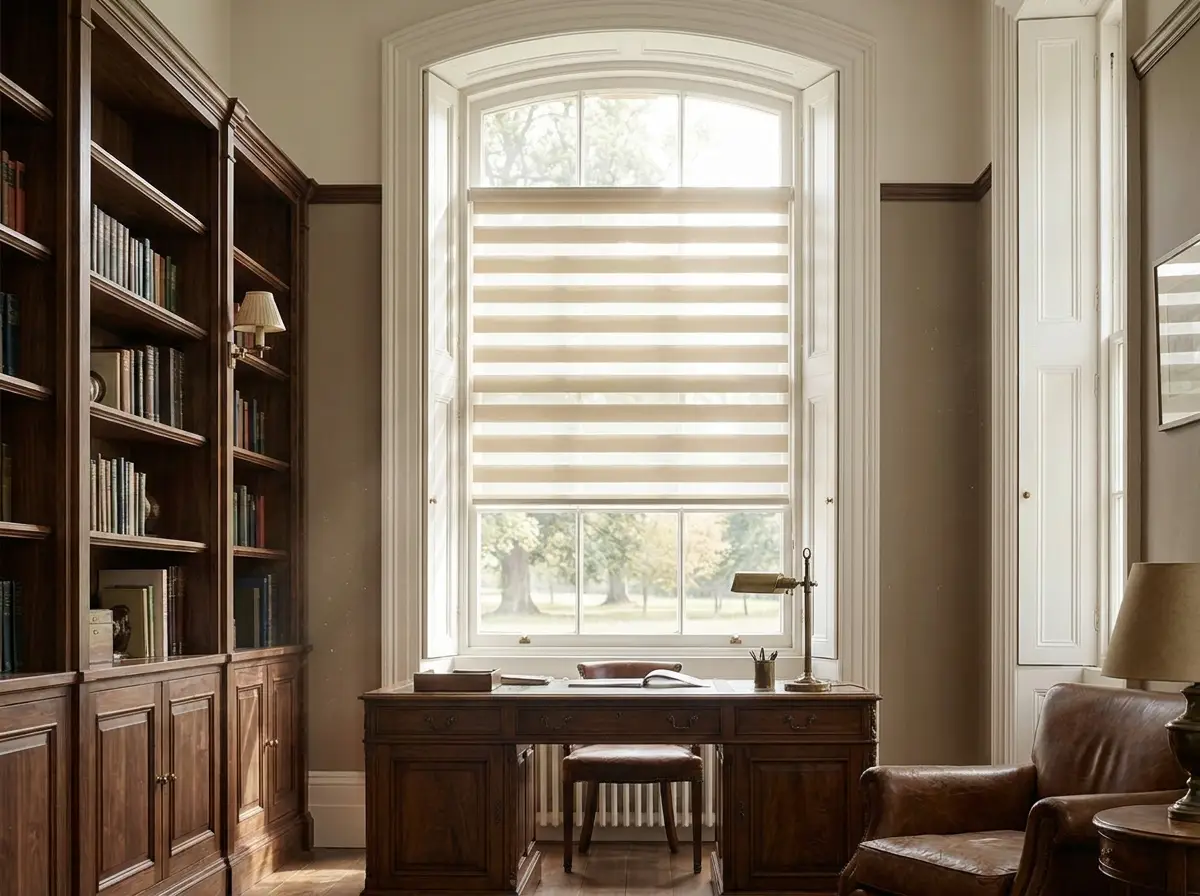
Two blinds on one bracket — sunscreen for the day, blockout for the night — or a day-night blind sliding sheer and solid bands past each other.
See day-night blinds →The Saxonwold fit
A century-old house earns its character honestly — and hands its windows a few quirks in the process. This is how a roller blind deals with them.
Original sash and steel openings run slightly out of square after decades of settling. We measure every opening individually so the blind sits flush, without light gaps down one side.
Inside-mount brackets sized to the actual recess, or a light outside-mount fixed to the wall rather than fragile sash frames — the free measure decides which suits your window before anything is ordered.
Chain tensioners are fitted on every corded roller, and nurseries are steered toward cordless or motorised operation with nothing left dangling within reach.
Tall stairwell sashes and high gable glass take the same roller on a quiet motor — a remote, a schedule, or a sun sensor doing the reaching for you.
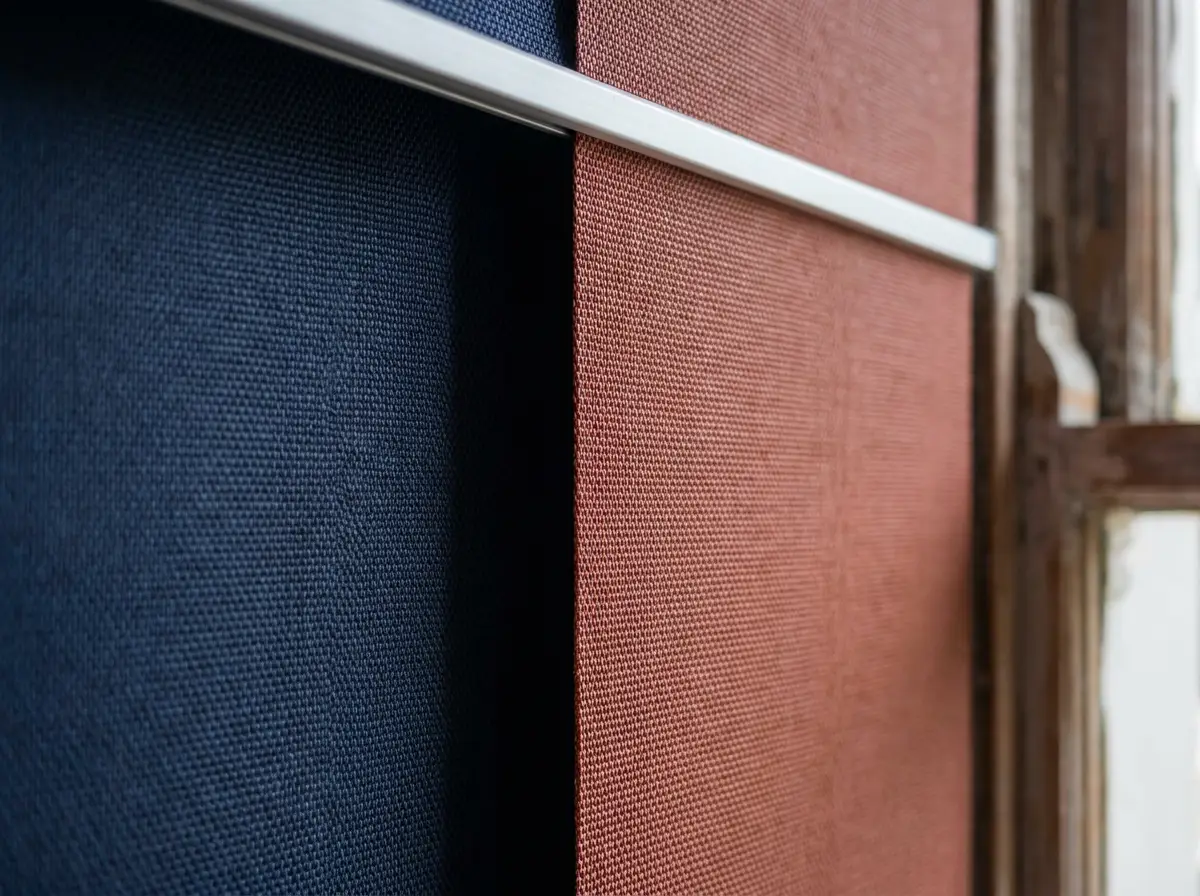
The measure visit brings the sample books to you — hold navy blockout and terracotta sunscreen against your own light before committing a single window.
The money
Guides by the square metre installed. Chain or spring rollers in blockout, sunscreen or a light-filtering weave price at R1,000 to R1,600, cheapest for plain blockout and dearest for a low-openness sunscreen on park-facing glass or a double roller carrying two fabrics on one head. Motorised, the guide is R2,500 to R3,800 with motor and control counted.
Old houses skew that one way: they hold a great many small windows. A pantry or landing pane consumes practically the bracket, tube and labour of a drawing-room one, so tiny openings attract a minimum instead of an area rate — which is why the quote runs line by line rather than by the room. Side channels and cassette fascias are separate lines too. The real figure follows the free measure, in writing.
Questions
The fabric itself passes no light; a small halo can show around the edges of an inside-mount. For true bedroom darkness we size the blind to the recess carefully or run an outside-mount that overlaps the frame — the measure visit tells us which your window needs.
3% is the usual answer here — it cuts glare and UV hard while holding the view of the trees. 5% keeps a touch more view and light for rooms that sit deeper in the canopy shade.
Chain with a child-safe tensioner is the everyday default. Motors earn their keep on wide, heavy or high blinds and in kids' rooms — and a double roller on one window usually motorises the blockout layer first.
Where we fit them
Blockout and sunscreen rollers go into more Saxonwold-area windows than anything else in the collection — from ridge-top sashes to village-street bays, cut to the actual opening in every suburb we cover.
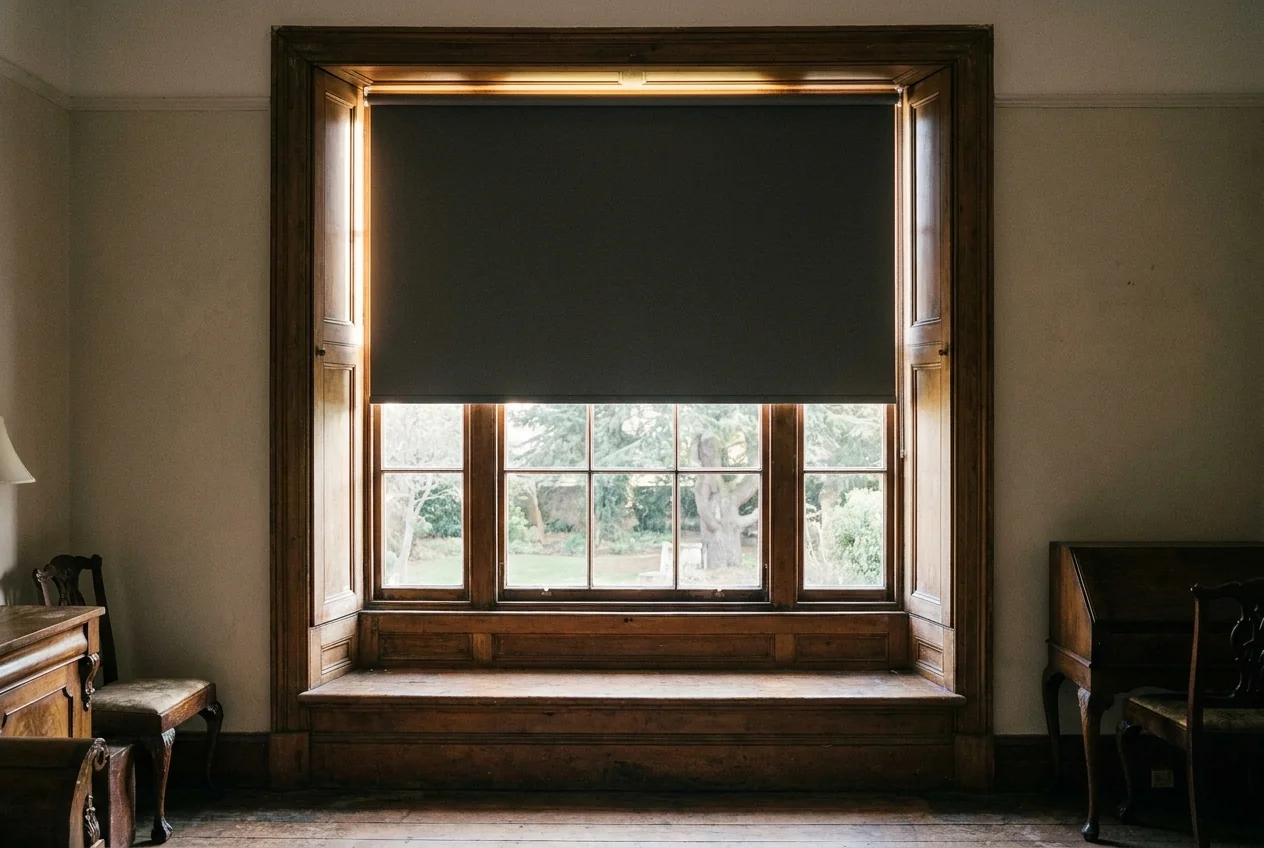
Where a roller fits in
A roller is the right answer more often than not — but not everywhere. The field guide sets out which elevation wants sunscreen, which wants blockout, and where something external beats both.
Get your quote
Tell us about the windows. A consultant calls you back, arranges a time that suits you, and arrives with the fabric samples you saw above.
Want a ballpark first? Pop rough sizes into the window list and we'll send a budget range by the next working day. Not sure how to measure? Leave it — our consultant measures for free and you'll get exact per-window pricing.