Shade with no posts in the view.
A folding-arm awning cantilevers off the wall and opens over the terrace at the touch of a button — then folds back flat against the house when the garden wants its sky back.
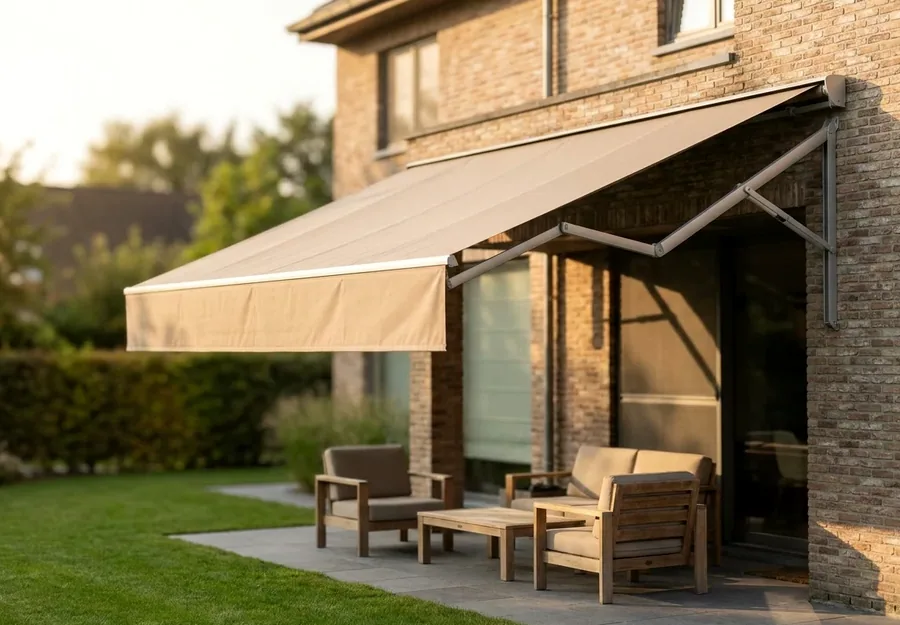
A folding-arm awning cantilevers off the wall and opens over the terrace at the touch of a button — then folds back flat against the house when the garden wants its sky back.
The specification
Size and projection come off the measure. These are the choices that decide how the awning lives afterwards.
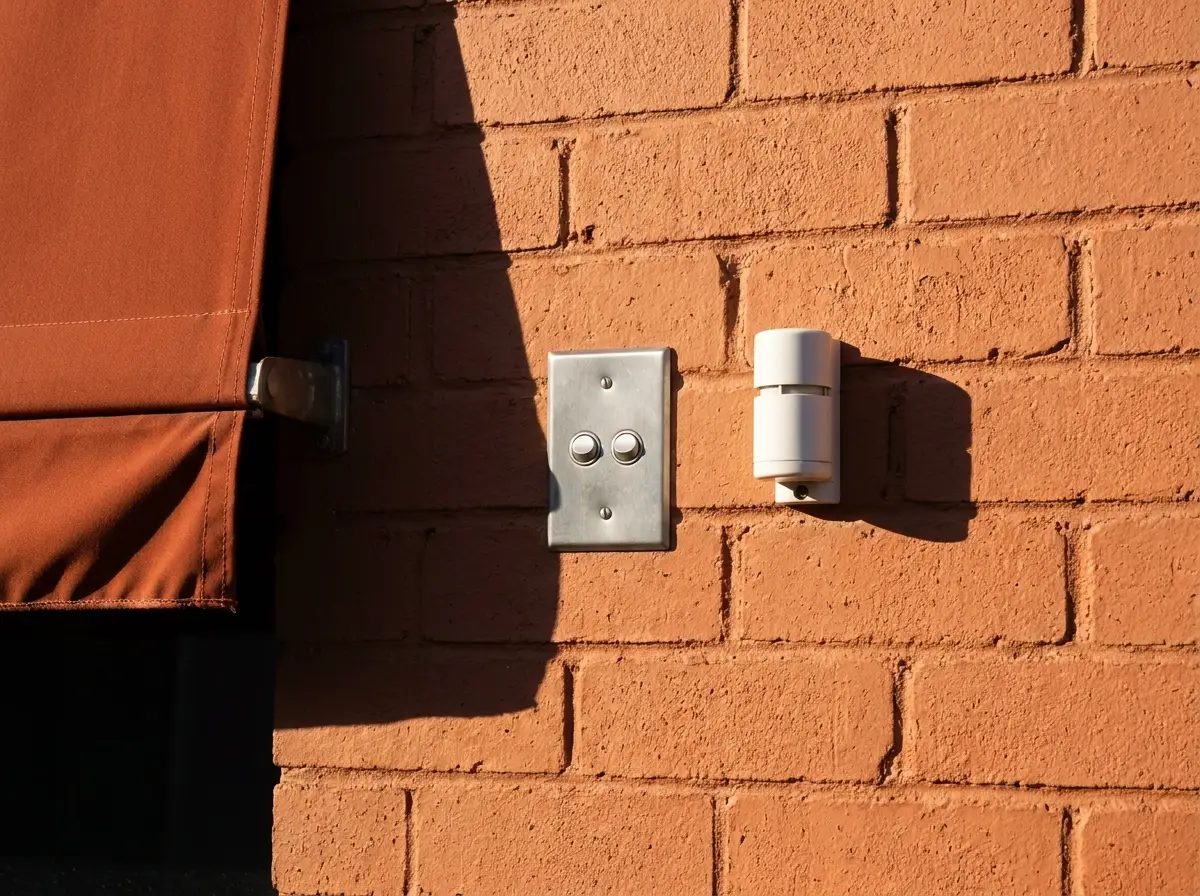
A crank handle works; a quiet motor gets used. Motorised awnings open for breakfast and close for hail warnings without anyone fetching a pole.
Ask about motors →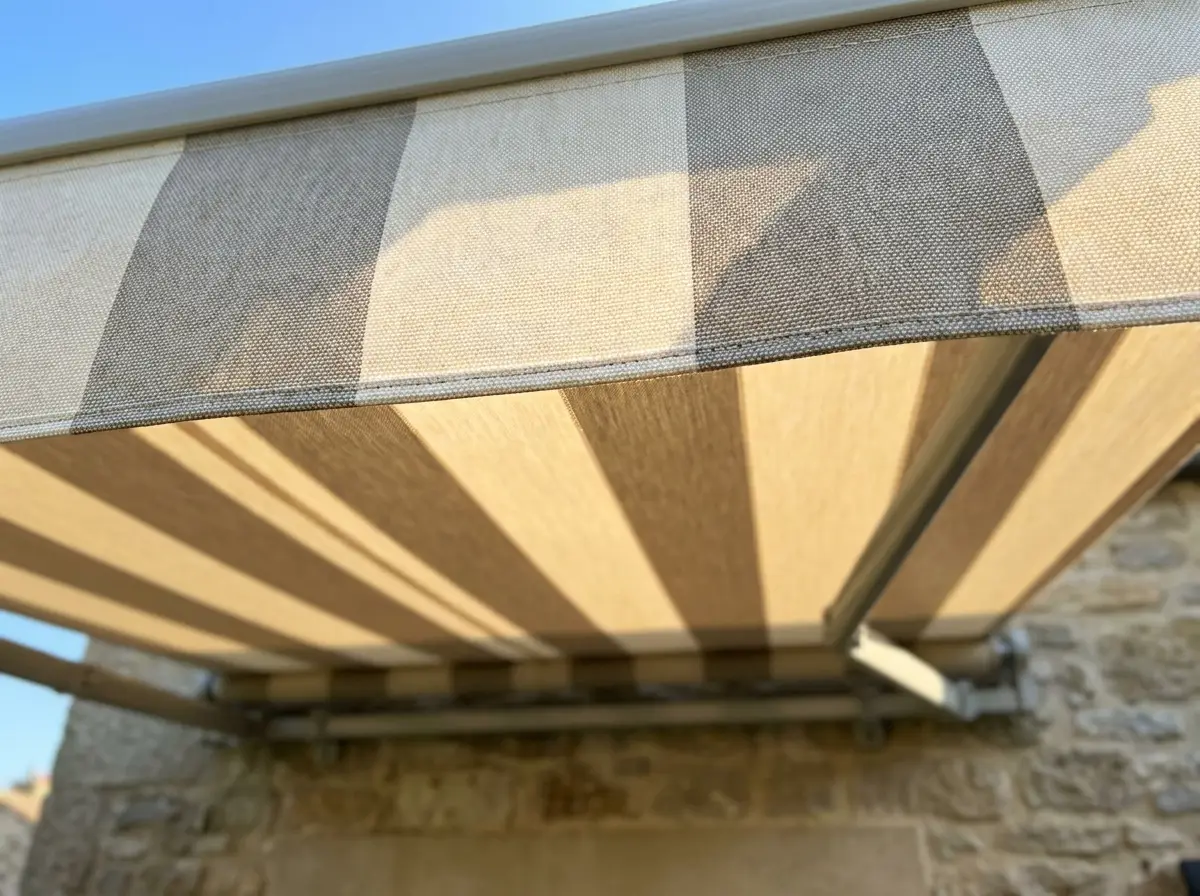
Solution-dyed outdoor acrylics hold their colour through Highveld UV — stone creams that flatter old brick, or deeper tones that frame the garden.
Ask about fabrics →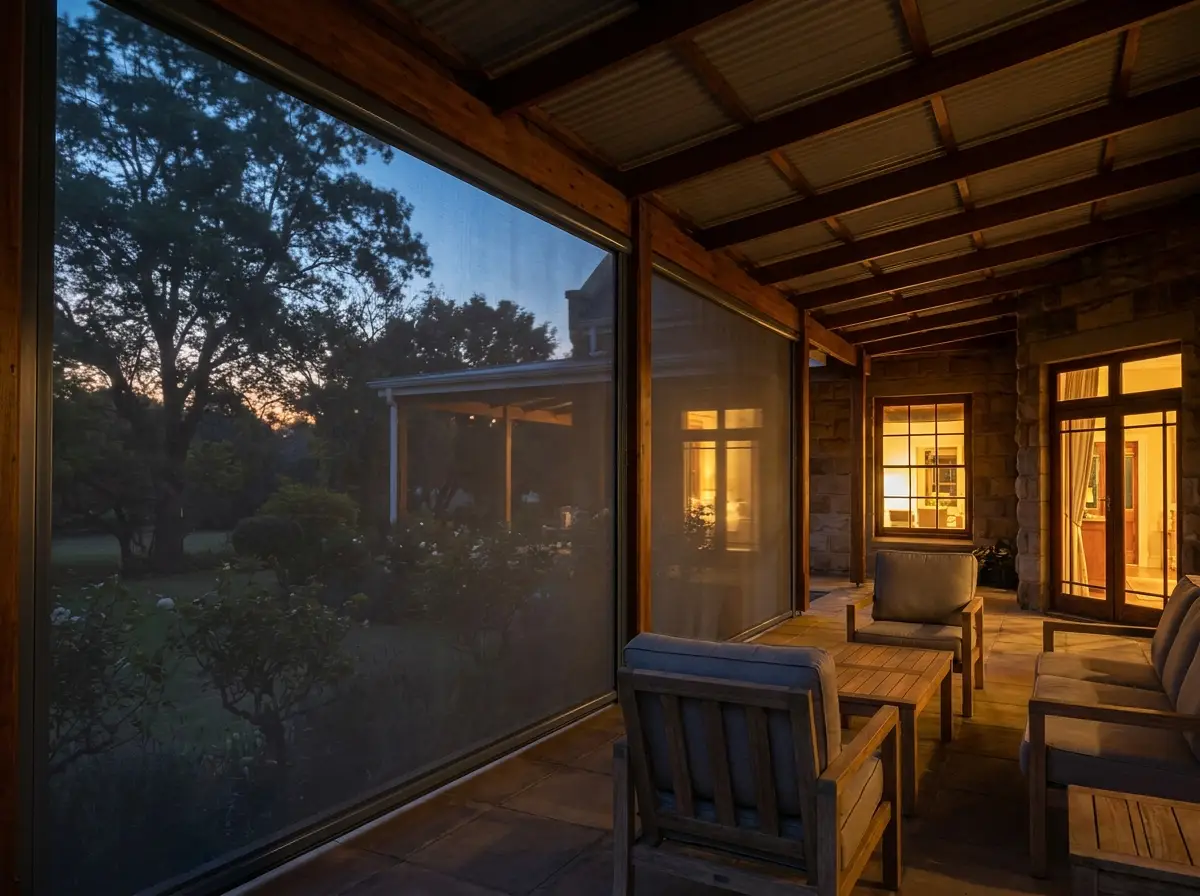
An awning shades from above; wind-locked zip screens close the sides against low sun and evening midges. Together they make the stoep a room.
Ask about screens →The Saxonwold fit
Mature trees, big lawns, and a thunderstorm most summer afternoons — an awning here has to be planned around all three.
A Highveld gust arrives ahead of the rain with almost no warning. A wind-sensored motor retracts the awning the moment the vibration threshold trips — that's the difference between an awning that lasts and one that doesn't.
Period brick and stone need the right anchors and load spread. The on-site measure checks the wall, the mounting height and the fall of the awning before anything is ordered.
We watch where the afternoon light actually lands — many Saxonwold terraces want the awning biased west of the doorway, so the table stays shaded at four o'clock.
Every awning carries a real wind rating and a projection limit. We quote within them, in writing — an awning left out in a storm gust is not a warranty conversation anyone enjoys.
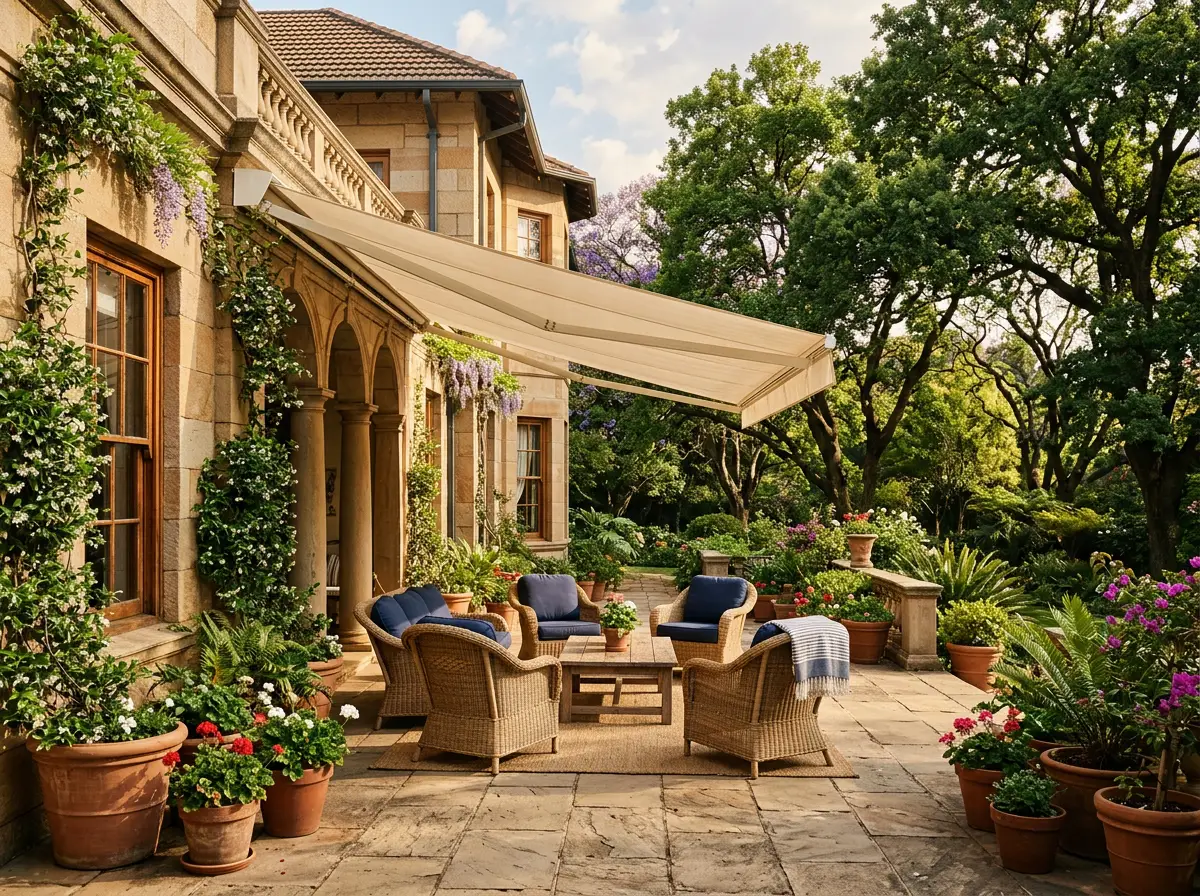
A stone-cream canopy over the terrace — extended through the heat of the day, folded flat against the wall the moment the wind sensor feels the afternoon change its mind.
The money
An awning is guided by the square metre of projection, installed — the shade thrown across the terrace rather than the width of wall behind. Crank-operated: R3,500 to R5,500, an open or semi-cassette mounting at the cheaper end and a full cassette, folding fabric and arms away out of the weather, at the dearer. With a motor and a wind sensor, R5,500 to R7,500.
Through a Highveld storm season the sensor belongs to the specification rather than to an options list: an awning still open when the wind arrives is the one that gets replaced. Compact awnings attract a minimum, because arms, brackets and crew do not halve with the projection. What you fix into matters too — an old fascia or a rendered parapet can need what solid brick does not. Measured free, then priced in writing.
Questions
Residential arms commonly project two to three and a half metres, depending on the model and the wall. The measure confirms what your mounting height and wall construction can honestly carry — we quote inside those limits, not at their edge.
Light drizzle at a good pitch runs off. Storm rain and gusts, no — which is exactly why we specify the motor-and-wind-sensor combination on the Highveld. It retracts itself; you don't have to be home.
The fixing is engineered for the wall it meets — spread plates and correct anchors for old brick or stone, placed at mortar lines where the fabric allows. We'd rather add a discreet support than overload fragile masonry.
Where we fit them
From ridge-top terraces to village-street verandas, a folding-arm awning is the same honest answer to a garden that gets weather — measured and fitted right across the suburbs we cover.
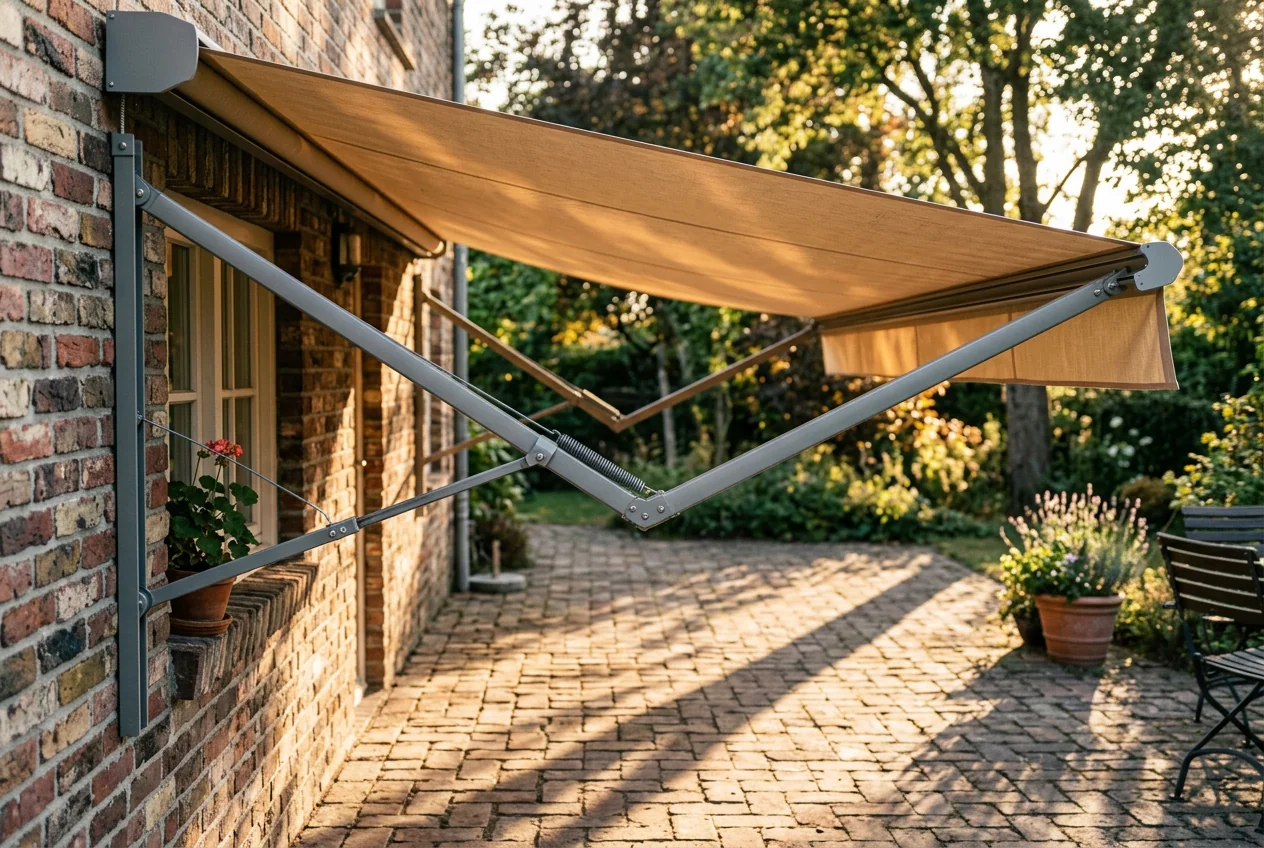
Where an awning fits in
Hail season runs October to March and peaks in November. The field guide explains what that means for outdoor fabric, and when a smaller, better-sheltered awning is the honest answer.
Get your quote
Tell us about the terrace. A consultant calls you back, arranges a time that suits you, and measures the wall, the sun and the wind exposure on site.
Want a ballpark first? Pop rough sizes into the window list and we'll send a budget range by the next working day. Not sure how to measure? Leave it — our consultant measures for free and you'll get exact per-window pricing.